

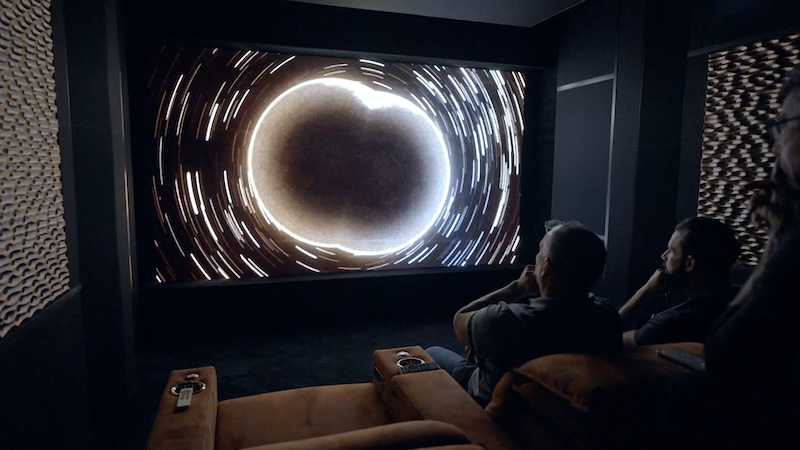
We went to Berlin, Germany to interview our partner Andreas "Andy" Riemann, founder of ARLED Solutions, about his latest high-end residential project.
In this interview, Andy explains how he integrated a massive, custom-fitted microLED wall alongside a digital, Dante-managed Trinnov AltitudeCI processor in a compact 20-square-meter room.
Please introduce yourself and this unique project.
Andreas Riemann: Hello, I'm Andy from ARLED Solutions in Germany. We are currently in Berlin inside a brand-new, unique home cinema project.
This room is relatively compact—measuring about 20 square meters with around 45 cubic meters of room volume—but it is absolutely packed with state-of-the-art technology.
It features one of the first residential microLED walls in Germany, which we integrated alongside a digital, Dante-managed Trinnov AltitudeCI processor and an active Adam Audio loudspeaker array in a high-channel-count 14.8.6 configuration.
Andy Riemann, founder of ARLED Solutions
What was the customer's initial goal when they approached you?
Andreas Riemann: The client first came to us about two years ago with an unfinished room. Their primary focus was the visual experience; they wanted us to show them what was currently possible on the market with high-end microLED displays. However, their ultimate challenge for us was simple but difficult: they wanted the absolute largest screen possible in this space.
How did you solve the physical space challenges to fit such a massive screen?
Andreas Riemann: The room itself has a total physical width of only 3.43 meters. Typically, the standard size for our SERIOUS LED wall is 3.23 meters wide. The customer insisted that this standard size was not wide enough and asked what we could do to maximize the screen.
As a joke, I suggested we could build a 3.64-meter screen, but that we would have to literally carve into the physical walls to make it fit. The customer loved the idea and told us to do it! So, we structurally recessed the side walls by about 10 centimeters on each side. Because of the modular nature of the LED technology, we were able to build out the screen to an incredible width of 3.52 meters, losing only about 3 millimeters of picture space on each side. We maximized every single millimeter of physical space in the room.
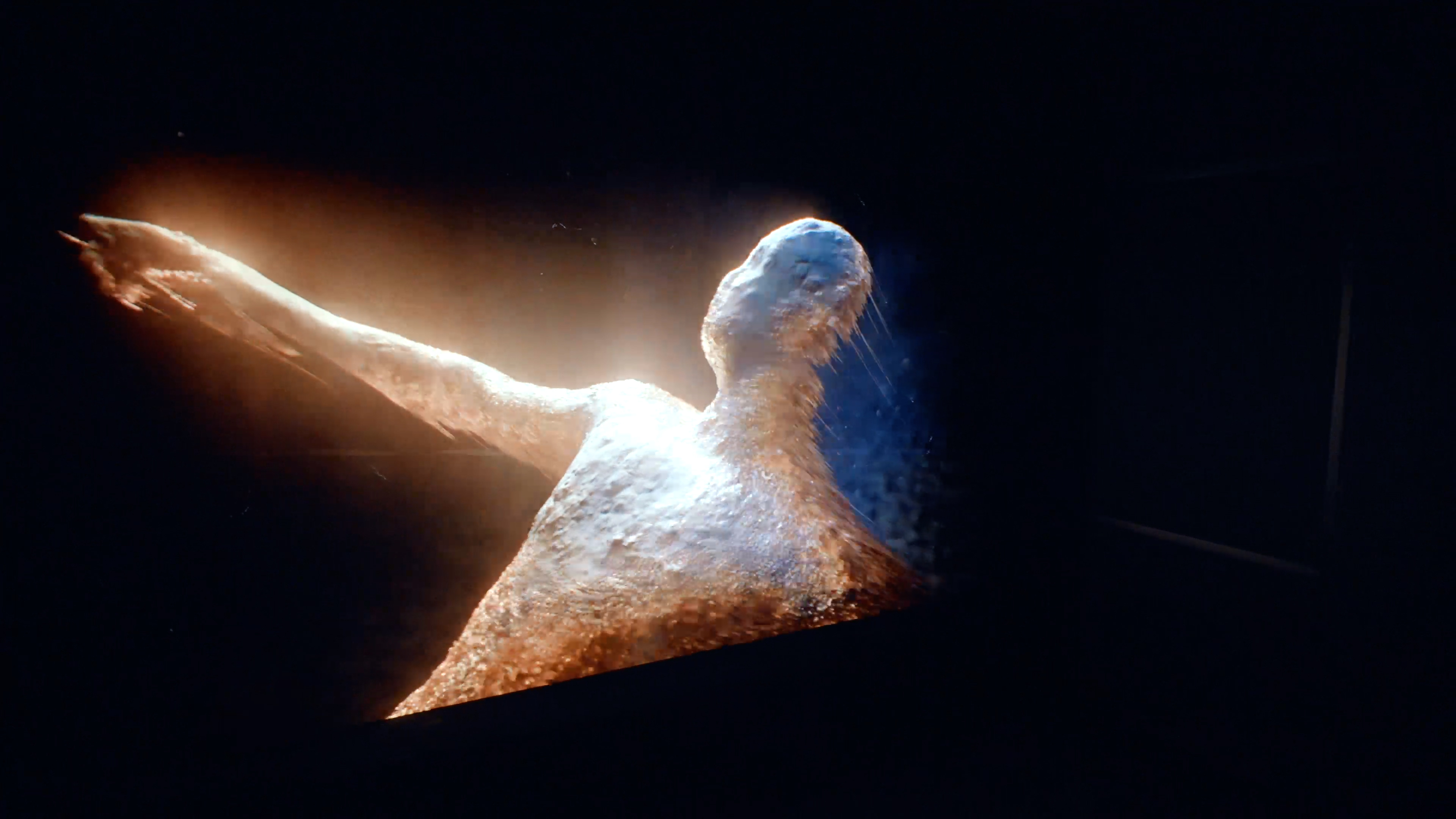
The project name: Pitch Black
How did you design the loudspeaker layout to complement the microLED wall?
Andreas Riemann: To deliver an equally massive soundstage that matches the immense visual impact of the microLED wall, we designed a high-channel-count 14.8.6 speaker system. In a smaller room, having more speakers actually creates a much more cohesive and seamless 3D spatial audio field.
We integrated multiple side surrounds and ceiling channels, alongside six front speakers positioned strategically both above and below the microLED wall to lock the dialogue and action directly to the screen. For the bass management, we deployed an advanced subwoofer array consisting of five subwoofers in the front and two in the rear, giving the room incredible physical impact and a true commercial cinema feeling.
How long did the design, construction, and calibration processes take?
Andreas Riemann: The pre-planning and structural design phase took about two months. Back at our company headquarters, we pre-fabricated the entire custom acoustic frame structure, complete with our modular cabinets and brackets. Thanks to this pre-construction phase, the actual on-site build-out in Berlin—including installing the acoustic treatments, mounting the frame, and assembling the microLED wall—took only 10 days.
Once the room was structurally finished, we spent two full days calibrating the audio system and one full day calibrating the video.
Why is Trinnov the ideal processor for a highly customized installation like this?
Andreas Riemann: Trinnov gives us the absolute maximum flexibility possible in a high-end audio system. It allows us to execute everything we can imagine. We can build and swap custom target curves, save multiple presets, fine-tune the low-frequency bass management, and switch between configurations instantly. It is an incredibly flexible system that is essential for achieving perfect 3D spatial audio in highly customized rooms.
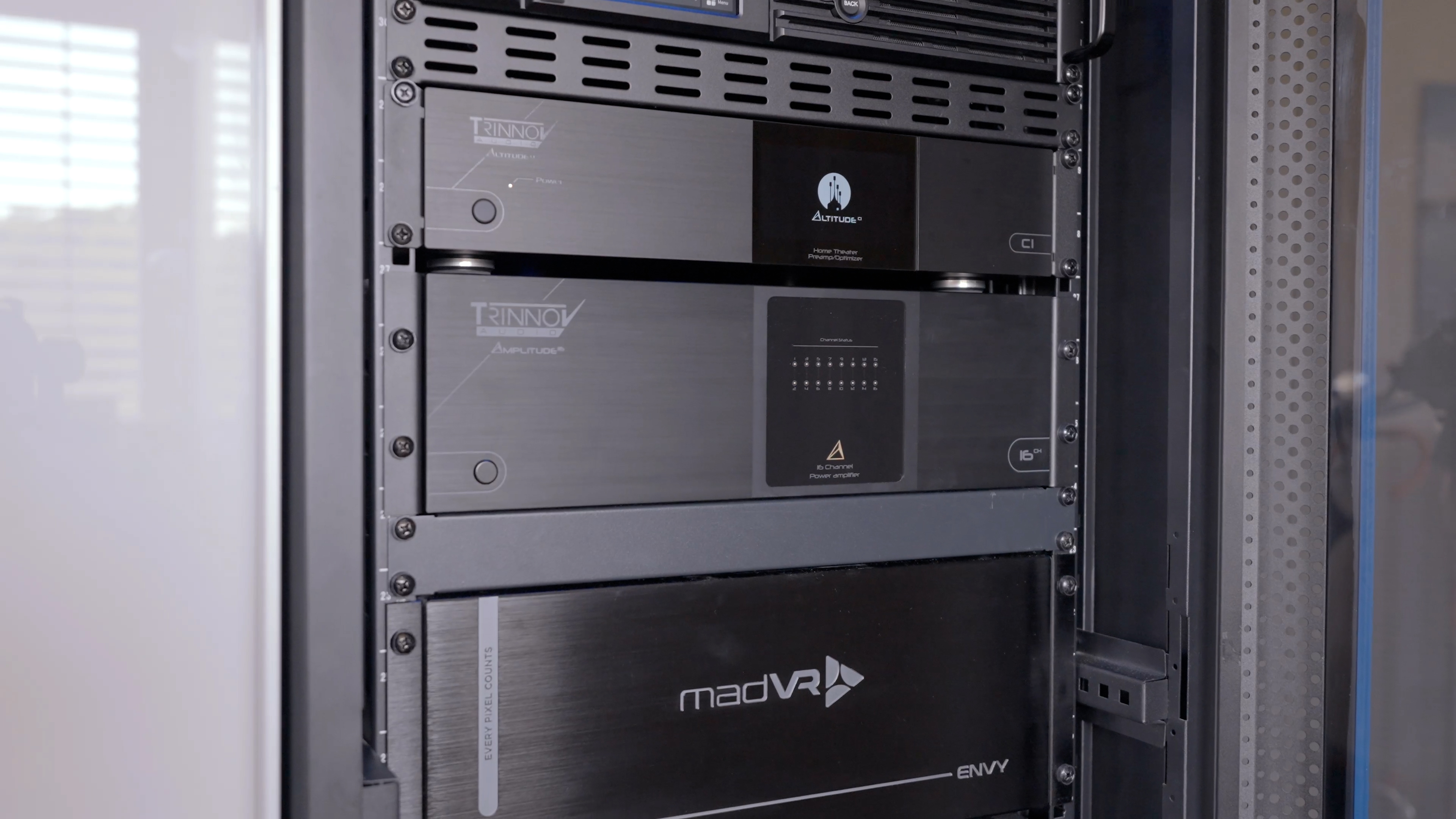
The project features an AltitudeCI & Amplitude16 connected over Dante
What advantages does the AltitudeCI and Dante integration bring to your workflow?
Andreas Riemann: With the custom installation (CI) version of the Altitude preamplifier, we have the unique ability to keep the audio signal entirely digital from the source straight to the amplifiers using a Dante network card.
Running a fully digital Dante network provides incredible system flexibility, especially for remote support. If we ever encounter an amplifier issue on-site, we do not need to physically change cables or travel to the client; we can simply log in remotely and instantly reroute that channel to an alternative amplifier channel over the Dante network. Having these remote-management paths makes it significantly easier and faster for us to troubleshoot and maintain our clients' systems.