
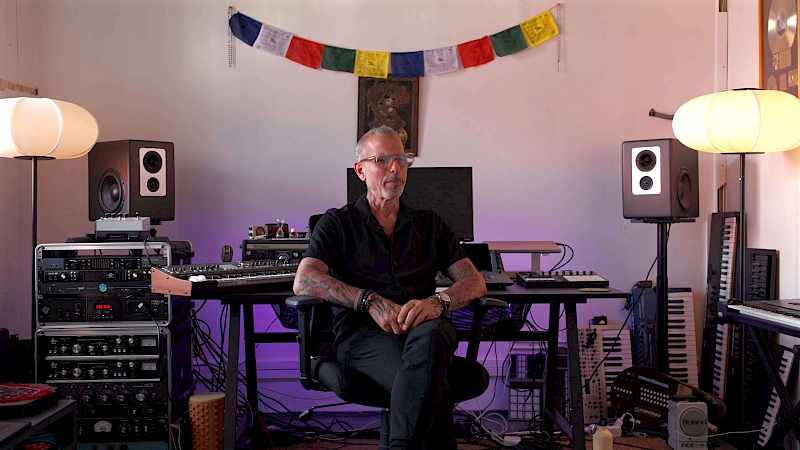
Producer, engineer, and electronic musician Carmen Rizzo has worked with artists including Seal, Coldplay, and Ryuichi Sakamoto, among many others. Originally from Los Angeles, he now calls Prague home, working from a former monastery where natural light and an inspiring atmosphere shape his creative process.
In this interview, Carmen explains how NOVA helps him navigate the acoustic challenges of an unconventional room, why hands-on monitoring control matters, and how listening to music has become as important as making it.
Tell us about your studio in Prague.
I’m from Los Angeles, but I’m very fortunate to live here in Prague. I really love it here in the Czech Republic.
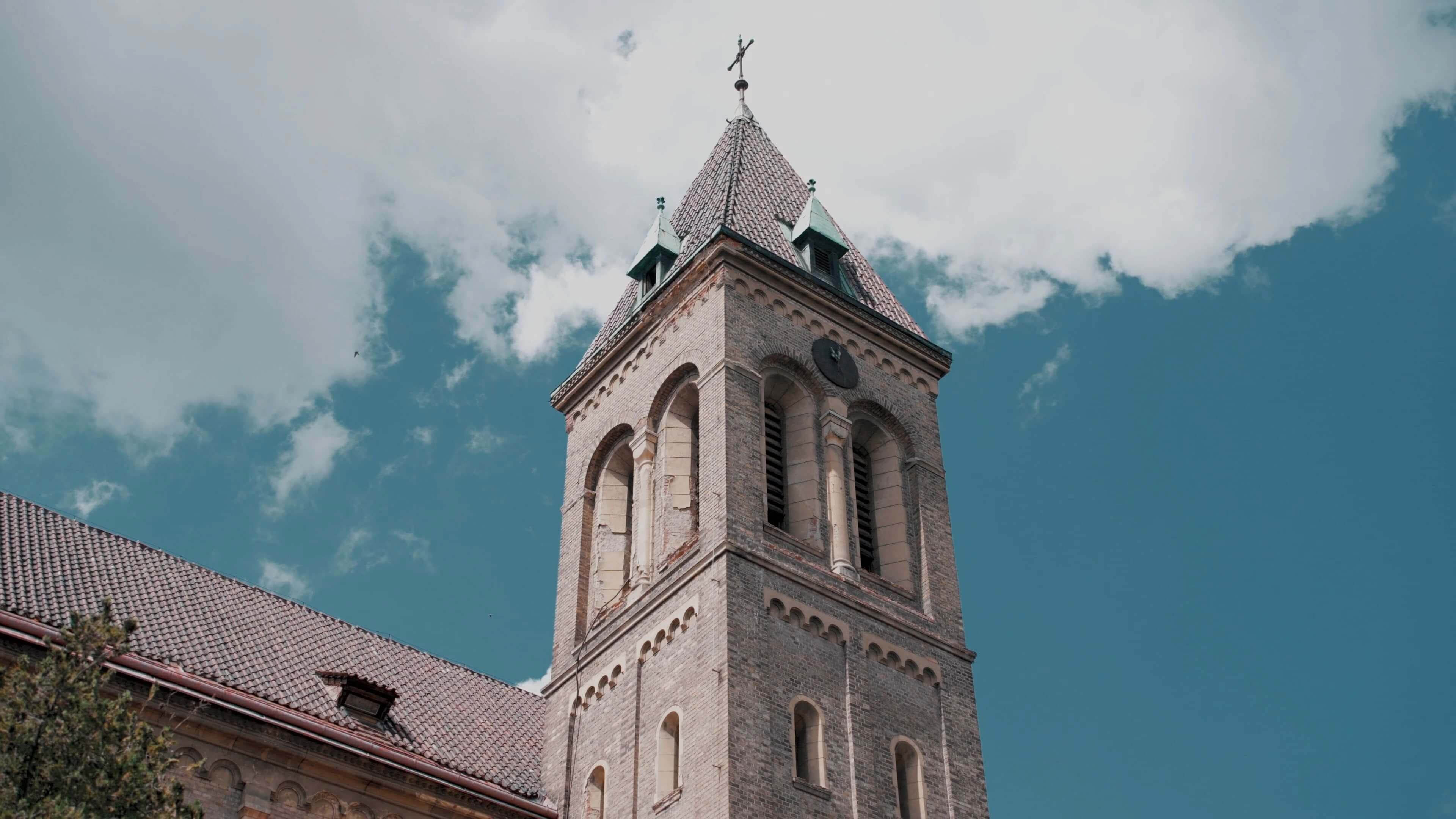
I have a wonderful studio, although I think of it more as a creative space. It’s situated in an old monastery. I’ve got windows and light, I’m near a park, and I can walk home. It’s a great working environment for me.
I’ve been fortunate to work in great studios all over the world, including Studio Miraval, which is fantastic. But I’ve always felt most comfortable in my environment. I like working somewhere I can create. I’m not really a purist.
What are the challenges of working in a space like this?
Everything comes with a price, and I definitely pay the price acoustically for having this cool, vibey studio. This is my third room in Prague, and these rooms can be boomy. I don’t have much carpet, the ceiling isn’t treated, and the windows are open half the time.
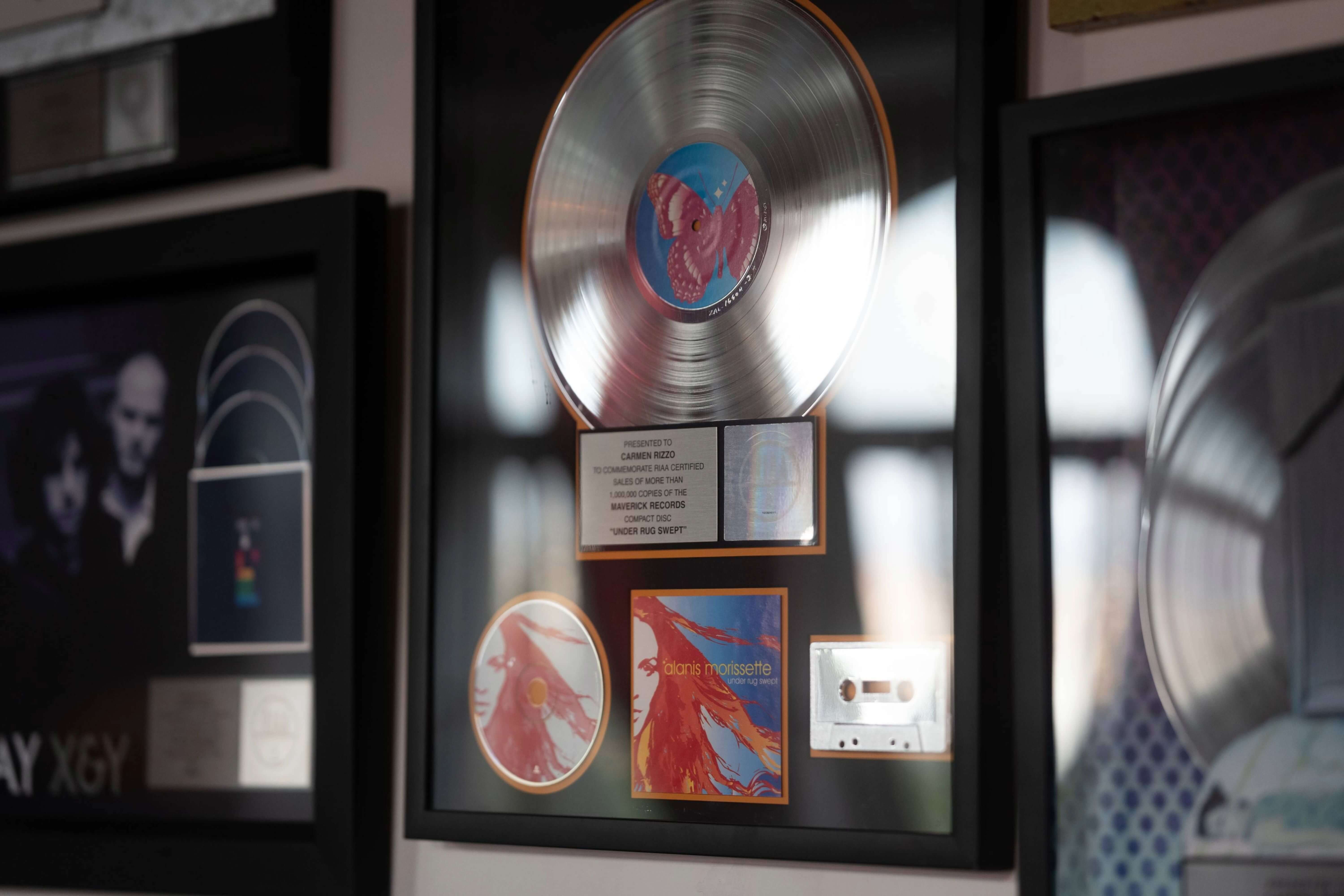
You can look at the gold and platinum records and trophies on the wall, but they mean nothing if I can’t hear properly.
For me, the atmosphere is important. I have no interest in working in a sterile room. Trinnov has helped me compensate for the challenges of this space, and I’ve come to rely on it.
How has NOVA helped your mixing skills?
Without a doubt, it’s helped my mixing. I wouldn’t be using it otherwise. Wherever you’re making music, you have to know what it’s going to sound like when you take it out of that environment.
The difference was night and day, to be honest. A lot of us work in small spaces or temporary rooms. Maybe you don’t own the room, or you don’t have the budget to treat it acoustically.
It’s hard to work without Trinnov now. It’s become like one of those plugins you count on.
How do you use presets in your everyday workflow?
I like to move around. I don’t like sitting in one spot all the time. Likewise, I have a second pair of monitors, deliberately of a different quality, so I can turn the other way and stop looking at a screen.
I might move my chair or stand up. With Trinnov’s presets and the remote, I can adjust the setup. If I want to listen in a corner or on the couch at the back, I can have a setting that helps compensate for that listening position.
That’s a game-changer for me.
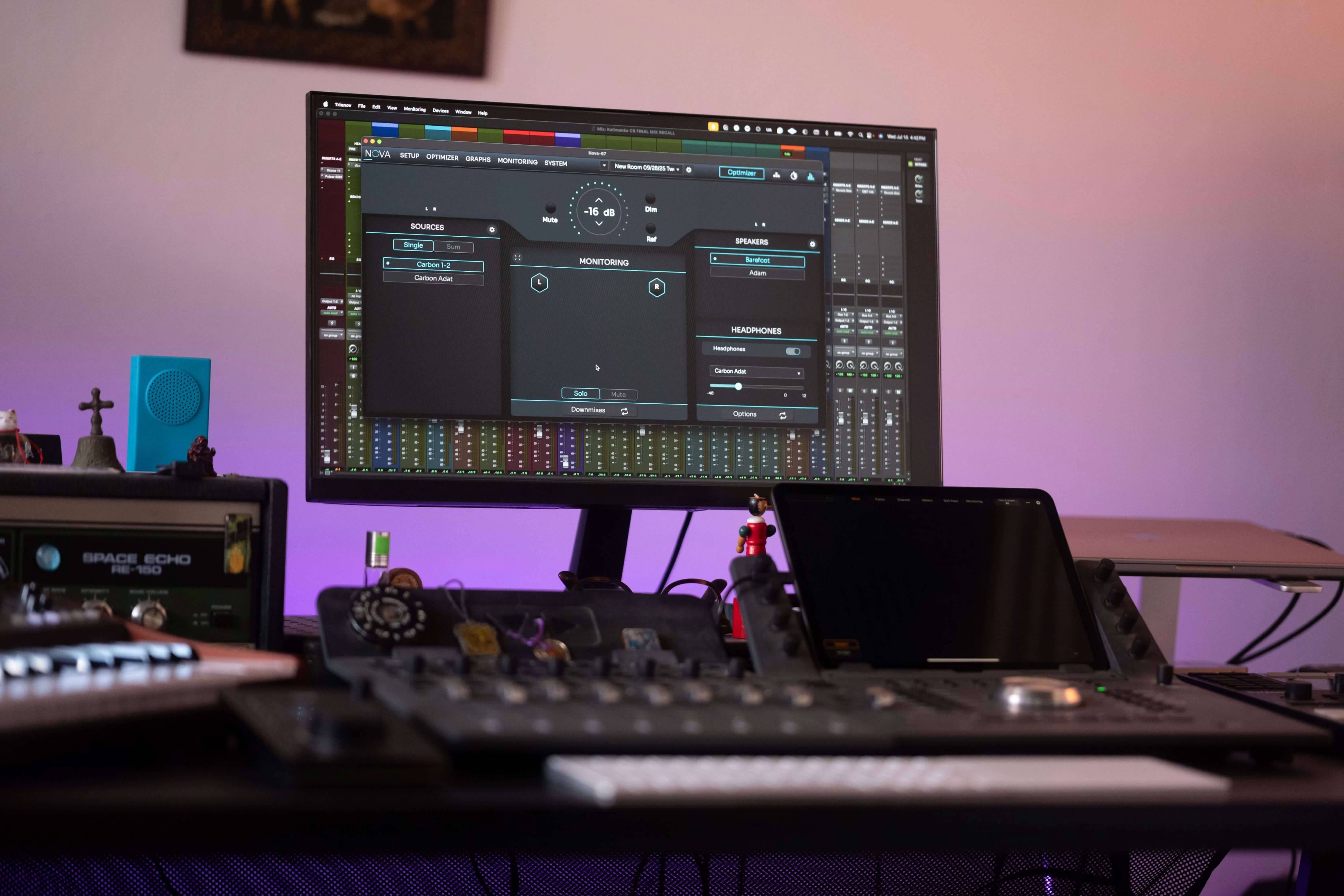
How important is having a physical remote?
It might seem like a little thing, but it isn’t little to me. Having a proper remote makes a difference.
You see people with really expensive monitors changing the volume with a mouse. I really appreciate having something physical to use. It’s those details that matter when you’re working with music every day.
It’s built for people who make music and people who listen to music. It’s not just a volume knob.
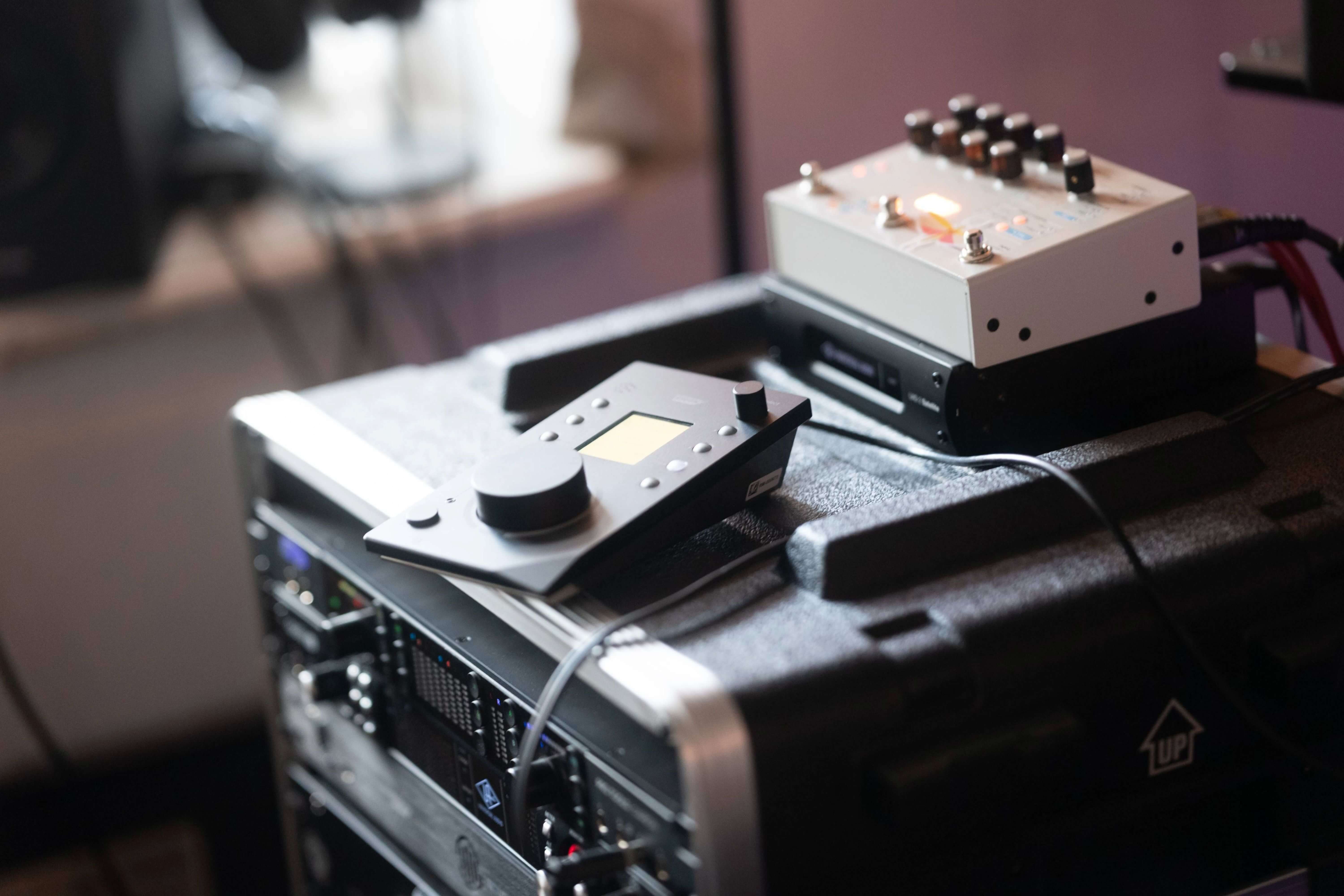
Do you also use Trinnov when you’re simply listening to music?
Absolutely. I’m here so often that I listen to music as much as I make it. In a way, my hi-fi is here in the studio. If I’m eating a sandwich or answering emails, I’m listening through Trinnov.
I don’t tend to reference another song in the same genre and try to make mine sound like it. I try my hardest to make something original, for better or worse. But I do listen to music I love, whatever the genre.
I love the energy of the monastery, so I stay and listen even when I’m not making music. Getting used to hearing different kinds of music through the same system gives me a reference in its own way.
What would you say to someone investing in their studio?
People sometimes spend a lot of money on unusual things when they make records. They’ll buy a big computer, lots of RAM and hard drives, then compromise on the speakers—or the other way around. But one thing you can’t cut corners on is the sound.
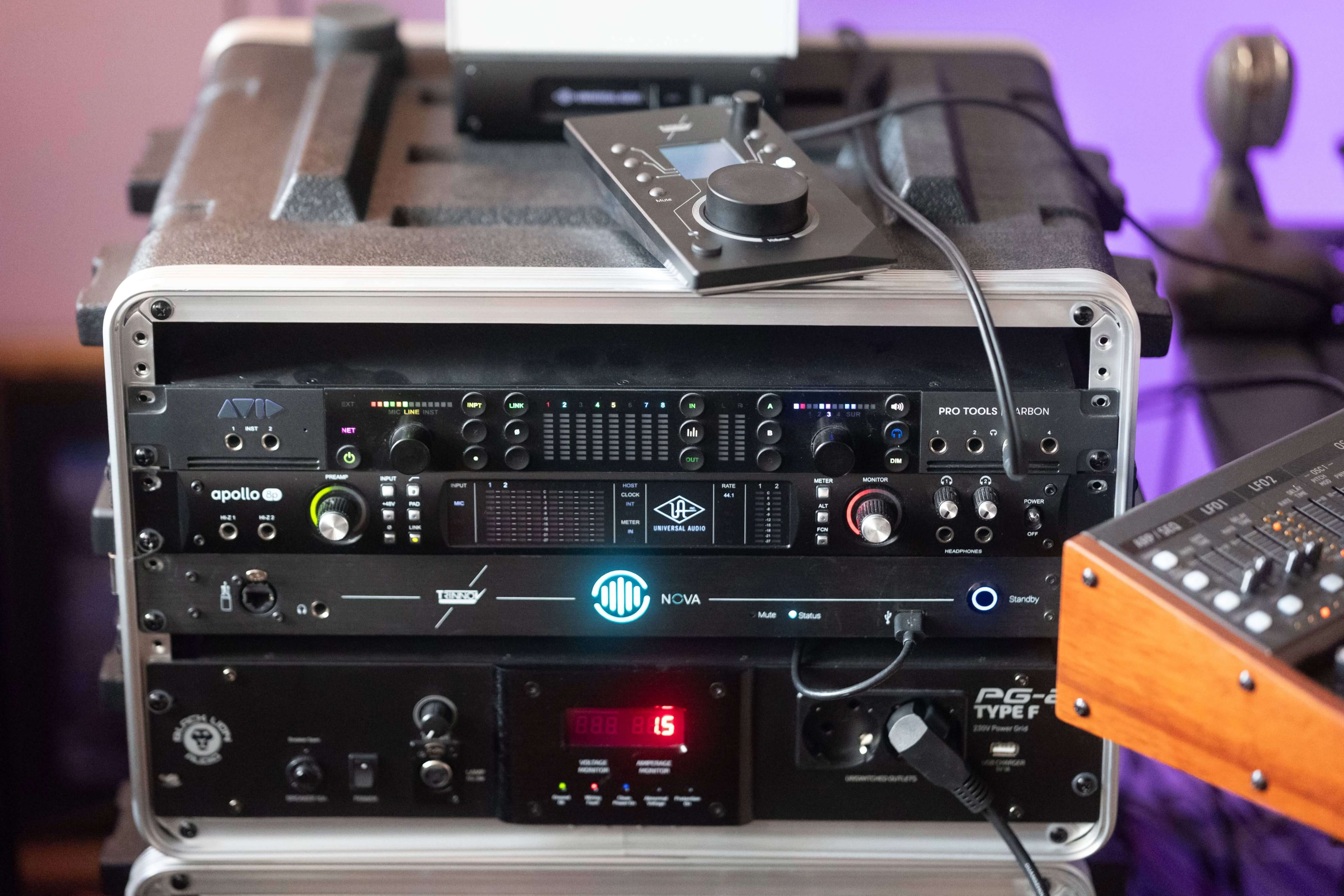
A lot of people will have decent speakers and a capable computer, but the room will still be a challenge. For me, Trinnov is an investment that can move with you. That box goes wherever you go, whether your next room is a step up or a step down.
If you want your records to sound good, you’ve got to start at the source.