

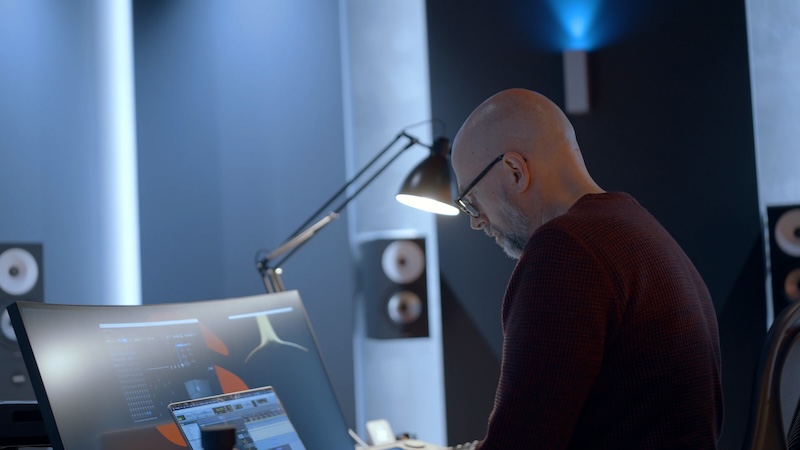
During a mixing session for Trinnov’s latest immersive trailer at the renowned MSM Studios in Berlin, we sat down with Grammy-winning mixer and spatial audio pioneer Hans Martin Buff to discuss his creative process.
In this interview, Hans Martin shares his insights on the freedom and challenges of working in spatial audio, how the brain processes sound combined with visuals, and his technical approach to crafting immersive audio as a primary narrative force.
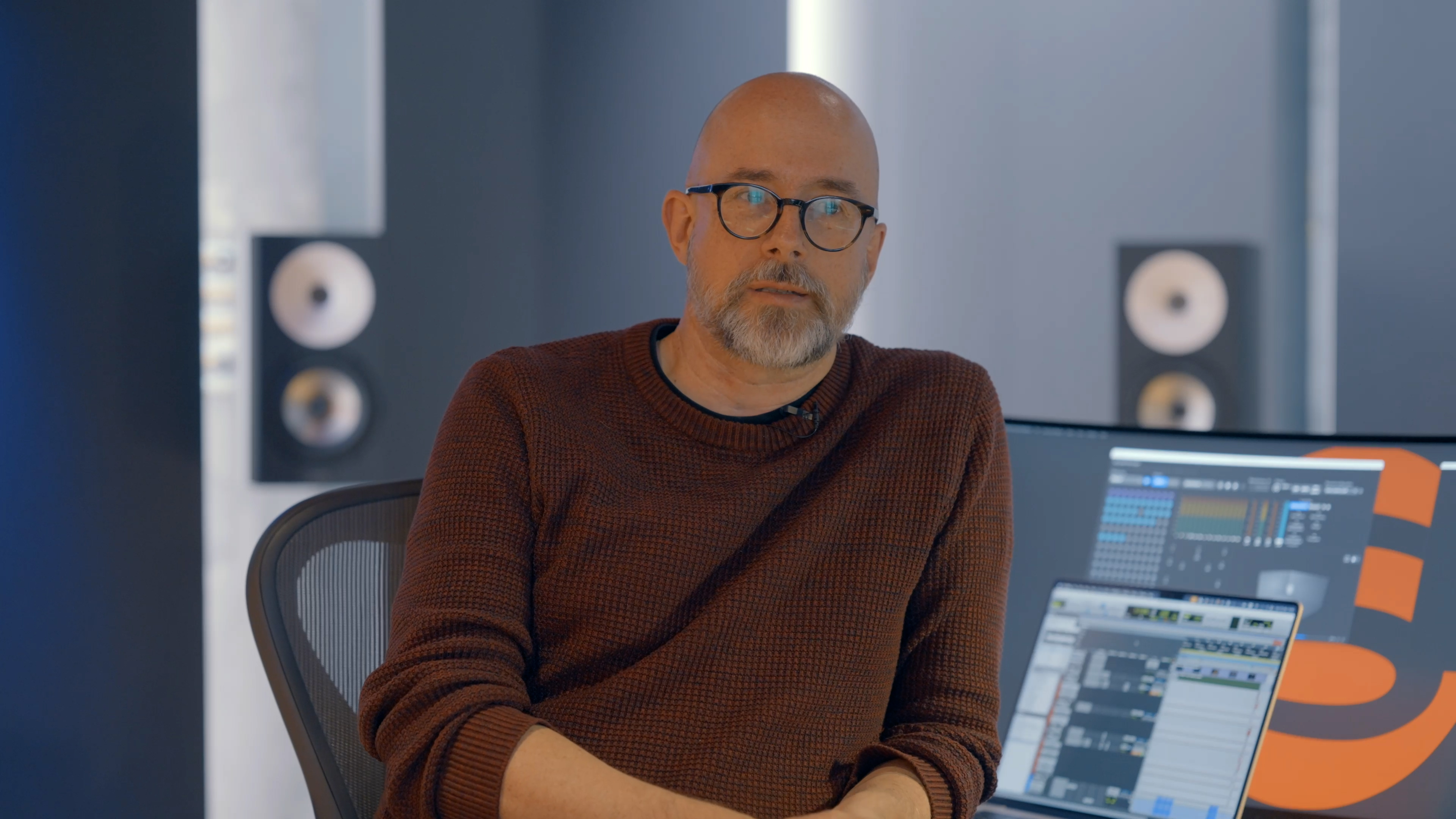
Hans Martin Buff during the mix of a Trinnov trailer
What makes working on an immersive project like this trailer so special compared to traditional stereo?
Hans Martin Buff: I really enjoy the fact that I get to work on something that is immersive for immersiveness' sake, to show what sound and movement can do for audio. What is really special about this is that the storytelling, even though there is a film with it, is within the sound itself.
Usually, in stereo, I have a stereo story that I have to adhere to, where I have a limited amount of freedom to pace the story behind me, above me, and to the sides of me, making it move. Here, the story is the movement, and that is really cool.
How do you navigate the balance between your creative vision and the original creator's intent?
Hans Martin Buff: I guess the challenge is the same one that is always there: someone has put a lot of thought into every detail of what I am hearing for the first time. What I hear in my head as a possibility of making this shine may be totally opposed to what they were thinking.
It is always a yin-yang between "let's try this approach" and "this is what I want to tell". But that is not much of a challenge; I think that is what this is all about. It is the creative conversation that people want to have.

Hans won 2x Grammy Awards for Best Immersive Audio Albums
How does the addition of video affect the way a listener perceives the audio and your mix?
Hans Martin Buff: My experience is that as soon as there is video involved, the audio becomes second fiddle—even if the project is about audio. As soon as you see something, your brain goes, "That's the story". On one hand, that is frustrating because whatever you do, the brain will react to the cool picture, and the audio informs the emotional impact rather than diverting your attention too much.
When you listen to a track for the first time without video, even someone who has worked on it for a long time has a "huh" moment where they say, "Wow, I haven't noticed that before". As soon as you put the video back on, you feel like, "Ah, that transition has to do with what is happening there and there". I enjoy that. I enjoy making a perfect companion piece to a video.
Can you describe your technical approach to this mix and how you utilized the immersive environment?
Hans Martin Buff: This project was an interesting combination of a variety of things I get to work on. First of all, it was stem-based, meaning I got premixed components, so I did not have to start from scratch and reimagine the sonics. It was very well presented to me.
I spent a long time going through all the tracks and finding things that I felt could work well in immersive audio—placing them differently, making them jump from here to there within a phrase, or move to different areas. Even in standard album-based situations, I wouldn't usually put certain things to the ceiling, but I did this time because I could create a balloon of sounds. I wanted to think about how it behaves as something that goes from A to B, connecting specific parts of the musical ideas.
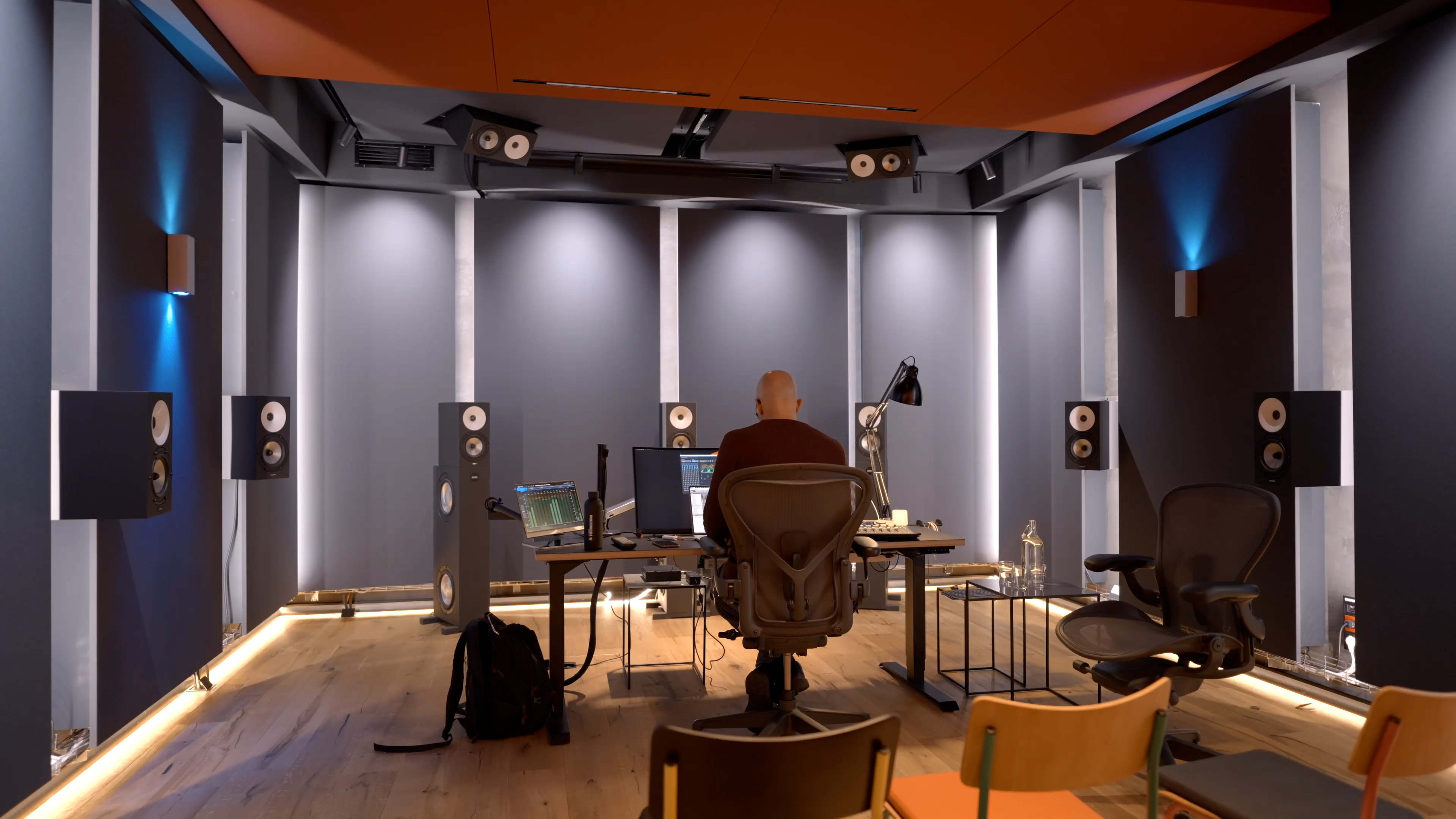
MSM Studio Berlin with Amphion Studio Monitors
How do you balance the technical possibilities of immersive audio with the needs of the story?
Hans Martin Buff: After I had done that, the thing I spent the most time on was actually undoing some of it. I felt that while a sonic cloud worked great by itself, it did not do anything to support the point the story was trying to make afterward. I think we solved that pretty well.
Usually, I wouldn't go so fully immersive right away; I would listen to something and have ideas based on what the song is trying to tell me. This time, it was more like, "What ideas can I possibly have to show off what I can do?" So, that was good fun.